


 |
 |
 |
 |
|
 |
 |
38
Relativity: The Special and General Theory
continuum of Euclidean geometrical space.¹
)
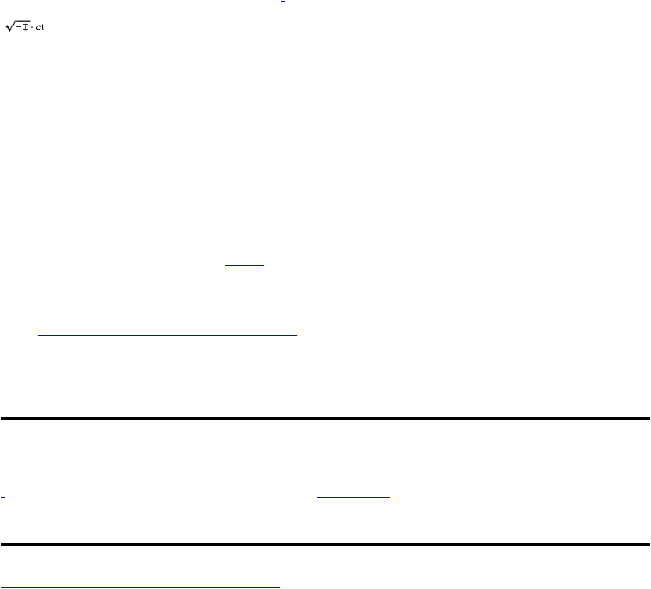
In order to give due prominence to this
relationship, however, we must replace the usual time co?ordinate t by an imaginary magnitude
proportional to it. Under these conditions, the natural laws satisfying the demands of the
(special) theory of relativity assume mathematical forms, in which the time co?ordinate plays
exactly the same role as the three space co?ordinates. Formally, these four co?ordinates
correspond exactly to the three space co?ordinates in Euclidean geometry. It must be clear even to
the non?mathematician that, as a consequence of this purely formal addition to our knowledge, the
theory perforce gained clearness in no mean measure.
These inadequate remarks can give the reader only a vague notion of the important idea
contributed by Minkowski. Without it the general theory of relativity, of which the fundamental ideas
are developed in the following pages, would perhaps have got no farther than its long clothes.
Minkowski's work is doubtless difficult of access to anyone inexperienced in mathematics, but since
it is not necessary to have a very exact grasp of this work in order to understand the fundamental
ideas of either the special or the general theory of relativity, I shall leave it here at present, and
revert to it only towards the end of
Part 2.
Next: Part II: The General Theory of Relativity
Footnotes
1
)
Cf. the somewhat more detailed discussion in Appendix II.
Relativity: The Special and General Theory